

 |
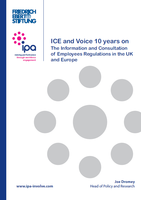
What role do works councils play in the United Kingdom? In November 2015, the London branch of the Friedrich Ebert Foundation and the British Involvement and Participation Association, IPA, released this analysis of over 10 years of practice with Information and Consultation in the workplace. The British labor legislation, with the so-called "ICE regulations", first introduced a form of "works council light" based on a EU Directive of 2002. In practice however it is not very widespread: only 25% of all employees in the United Kingdom are represented by such a committee. → Download of the study |
|
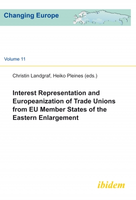 |
Eastern European trade unions on course for EU? This research report, published in May 2015, examines the integration of trade unions from the six largest Eastern European acceding countries (Bulgaria, Poland, Romania, Slovakia, Czechia and Hungary) into the EU policy system of Brussels. It is their participation in the social dialogue bodies which is of primary importance according to the report. The authors also highlight the role of Eastern European trade unions in European works councils. Trade unions from new member states generally perceive the EU in a definitely positive manner and its influence on national policies mostly as useful. The study was sponsored by the Hans Böckler Foundation in Germany. → Table of contents of the book → On-line book order |
|
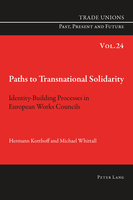 |
Empirical case study on European works councils A research paper was published in March 2014 which examines life inside the European works councils of five companies. The authors, who were sponsored by the Hans Böckler Foundation, have analyzed key points which help in establishing identity and in promoting mutual co-operation. According to works council researcher Hermann Kotthoff, "the most important point is that the EWC should have dialogue with management on as many important topics as possible and also be taken seriously by them." → Further information on the study → Table of contents of the book → On-line book order |
|
 |
Workers’ voice in corporate governance In October 2013 the British trade union confederation TUC started its Corporate Governance campaign. The participation of employees in boards of directors would improve the long-term success of British companies. The TUC makes reference to other countries, like Germany and Sweden, who came out of the financial market crisis better off than the United Kingdom thanks to participation. In addition, participation rights in supervisory or administrative boards in France were reinforced in June 2013. This study examines the European perspective. → Study download |
|
 |
European comparison of labour relations In April 2013 the European Commission published its latest report on the situation of European level labour relations and within the EU member states. It appears to be “increasingly conflictual” in comparison to previous years, as a consequence of austerity measures due to the financial market and euro crises. The report which is published every two years, contains up-to-date figures e.g. on the scope of collective agreements or trade union membership figures and provides an overview of European labour legislation reform since 2010. One chapter is devoted to the situation in Central and Eastern Europe. → Report download |
|
 |
Company Reporting on non-financial matters The European Trade Union Institute (ETUI) published this review in February 2013 which examines the legal environment and practices in company reporting within 28 European countries above and beyond traditional balance sheets and business figures. Is there an open and transparent dialogue on social policy and on the efforts to attain sustainability? 2011 a team of experts from the European Commission already started working on this subject and subsequently a draft directive has been submitted in April 2013. In the future companies with more than 500 employees will have to make annual reports concerning human and employee rights, environmental protection and anti-corruption measures. → Report download |
|
|
Labour relations in South-East Europe The regional project "Labour Relations and Social Dialogue in South-East Europe" of the Friedrich Ebert Foundation releases a national yearly review of eleven countries from the Adriatic to the Black sea. This includes the EU member states Slovenia, Romania and Bulgaria as well as the acceding country Croatia. The country reports are supplemented by some articles on topics focusing on South-East Europe. → Regional project website with links to the publications |
 |
Manual on social dialogue The Turin-based training center of the International Labour Organization (ILO) published this manual on social dialogue in January 2013. It is to support the relaying of union training in Central and Eastern European countries. The 90 page brochure presents basic knowledge on social dialogue at individual country level as well as on the European level. One chapter is dedicated to the European works councils. Further chapters describe strategies for resolving conflicts as well as techniques for conducting negotiations with the employer. → Brochure download |
|
 |
Manual on responsible business conduct for multinationals In 1976 the governments of the OECD countries first formulated the basic principles for responsible business conduct in multinational companies. In May 2011 these were revised. The obligation for companies to take due care of the social situation in the supply chain is new, as well as a reinforced complaints process. Such complaints are submitted over and over again also by trade unions. This trade union manual based on the revised principles has been available since December 2012. → Brochure download |
|
 |
Country review of labour inspectors In June 2012, the European Federation of Public Service Unions (EPSU), published a review on the role and responsibilites of labour inspectors in 15 countries. Government authorities of this kind in Germany, Denmark and the United Kingdom have the least power, since they are only responsible for health and safety questions in the workplace. In most EU-countries, however, the responsibility of labour inspectors goes a lot further; they monitor employment, working hours, wages and equal treatment. The national labour inspectors hereby take on the responsibilities that are attributed to the works councils in Germany. → Brochure download |
|
 |
Current situation of Polish trade unions In June 2012, the European Trade Union Institute (etui) in Brussels released this country report on trade unions in Central and East Europe. The comprehensive 98 page work digs deep into the history of the Polish trade union movement, describes today's organization with its internal divisions as well as the development of its membership. We learn that only 10% of the Polish working population was unionized in 2010. The report appendix contains a time-table of major events in industrial relations and an extensive trade union glossary. → Report download |
|
 |
EWC landscape: up-to-date inventory This 21 page report, presented by the European Trade Union Institute (ETUI) in 2011, analyzes the operation and composition of European works councils. The evaluation is based on statistical data from the institute’s EWC database. By these means one can compare the goals of the new EWC Directive with practical advances made so far. The study is part of a more comprehensive analysis which is to appear shortly as a book. → Download this report |
|
 |
Legal support material from Brussels In December 2010 the European Commission released an experts’ report on the individual chapters of the new EWC Directive. It was edited by a team including both employer as well as trade union friendly representatives and can therefore be of great use as a reference for legally disputed cases. It can also be helpful during renegotiation of EWC agreements. → Download this report |
|
 |
Focus on EWC research In July 2010 a book from Prof. Jeremy Waddington, a EWC researcher from Manchester University was published. In 2005, as a project manager at the Brussels based European Trade Union Institute (ETUI), he was responsible for the largest ever accomplished empirical analysis on European works councils. The book is based on this extensive numerical data. At the time the quality of information and consultation on restructuring was very poor under the old EWC Directive. The author highlights the infrastructure of European works councils (means, training, etc.) and the role of trade unions. A separate chapter is dedicated to the development beyond information and consultation to transnational negotiation. → Further information on the book → Browse through book on-line → Interview with the author |
|
 |
Anthology on legal aspects of the new EWC Directive In June 2010 a new volume on important legal aspects of the EWC legislation has been released. In the first part of the book an analysis is made between the old and new EWC Directives in the context of court decisions and other EU rulings. It finishes off with country reports from Austria, Belgium, France, Germany, the Netherlands, Slovakia, Sweden and the United Kingdom. In the second part of the book several authors discuss some specific aspects of the new legal situation. → Further information on the book → Table of contents |
|
 |
Legal analysis of the new EWC Directive In May 2010, the European Trade Union Institute (ETUI) in Brussels published an extensive 140 page analysis which examines the new EWC Directive article by article from a legal viewpoint. The wording from existing EWC agreements is taken as example. The analysis was developed with support of a group of lawyers with close ties to trade unions, working in different European universities. → Download this brochure |
|
 |
British lawyers focus on Consultation procedure The London based group of lawyers with close union ties, Thompsons Solicitors, deals in the spring 2010 issue of its magazine "Labour & European Law Review" with consultation procedures in British companies. One article analyses the legislation for information and consultation in the workplace from 2005 which was the transposition of an EU Directive. Up till now however, this legislation was hardly ever used by British trade unions or employees. Further contributions describe the procedures for mass redundancies and the transfer of business, where the legal situation in the United Kingdom was also improved considerably by EU legislation. → Download this magazine |
|
 |
Country comparison of European Works Councils A research project at the Ruhr university in Bochum on European Works Councils in the motor industry has been in progress since 2007. The results are now available in a book form. An English-language publication appeared under the title "European Works Councils in complementary perspectives" at the end of 2009. → Further information and table of contents |
|
 |
Current Trends in European Employee Participation This collection published in September 2009 describes a German-Dutch conference on the employee participation. Topics covered are industrial relations in Germany as well as in the Netherlands, European works councils and workers' representation in companies with the legal status SE (Societas Europaea). Dr. Werner Altmeyer of the training and consultancy firm "euro-workscouncil.net" describes EWC intercultural problems and gives examples of EWC contractual policies. → Further information and table of contents |
|
 |
Positive and negative consequences of European Works Councils This working paper published in June 2009 by the European Trade Union Institute (ETUI) in Brussels investigates a subject which remains largely unanswered: how does the existence of European works councils benefit the different groups of stakeholders within the company. The analysis was not able to establish any significant disadvantages for shareholders or investors whereas the effect was obviously positive for both employees and managers. → Download this working paper |
|
 |
Co-Determination in Germany - A Beginners' Guide This collection of texts aims to provide a basic explanation of what co-determination is all about, how it functions in practice and what it means to the Germans and to Germany as whole. The 2009 reprint of this guide was published by the Hans Böckler Foundation, which deals with co-determination and research linked to the world of work on behalf of the DGB, the Confederation of German Trade Unions. → Download this brochure |
|
 |
Taking Stock on Transnational Framework Agreements A new report from the Dublin based European Foundation for the Improvement of Living and Working Conditions was published in June 2009, and it deals with transnational framework agreements at a global and European level. The authors, including Dr. Reingard Zimmer of the training and consultancy firm " euro-workscouncil.net ", examine the contents of such agreements and the role of European works councils. → Summary of the report → Download the full report |
|
 |
Analysis of EWC Agreements The Social Development Agency (SDA) in Brussels presented a new evaluation of 102 EWC agreements from its database in October 2008, which examines qualitative and quantitative developments of the last four years. Of the 102 EWC agreements which were signed since 2004, 19 are from Germany and France each, 16 from the UK and ten from Belgium. Italy recorded the strongest increase with eight new EWC agreements. The country has now 39 European works councils, but is still located in the delay. Although training measures aren't regulated obligatorily in the former EWC Directive, this was confirmed Europe-wide in 76% of all cases in the EWC agreement since 2004. → Download this study |
|
 |
Improvement of cooperation between EWC members This handbook wants to help fostering coordination of activities and communication among European works councils’ members. It was published in April 2008 as part of a project, co-funded by the EU and initiated by the Spanish trade union confederation CC.OO. together with partners in Portugal, Italy, Bulgaria and Germany. Team members of the training and consultancy firm " euro-workscouncil.net " participated in the preparation for and execution of project workshops. → Download this handbook |
|
|
|
Employee representatives in an enlarged Europe This report published in April 2008 provides a general overview of the basic characteristics of national industrial relations. Volume 1 covers Austria, Belgium, Bulgaria, Croatia, Cyprus, Czechia, Denmark, Estonia, Finland, France, Germany, Greece, Hungary, Iceland, Ireland and Italy. Volume 2 covers Latvia, Liechtenstein, Luxembourg, Malta, Netherlands, Norway, Poland, Portugal, Romania, Slovakia, Slovenia, Spain, Sweden, Turkey and UK. Volume 2 also covers the role of the European social partners, as well as European and international institutions. → Download volume 1 → Download volume 2 |
|
 |
European Works Councils in practice: Key research findings This paper of the Dublin based European Foundation for the Improvement of Living and Working Conditions resumes the latest research findings in the field of European works councils. It looks especially on EWC involvement during restructuring processes. The booklet was published in March 2008. → Download this booklet |
|
 |
Campaigner’s Guide to the UK Companies Act In the year 2006 the company law in the UK experienced the most comprehensive reform for 150 years. The new act obliges management to notice consequences for employees, community and environment and to give account at their decisions publicly. The aim of this guide published in September 2007 is to increase success of British enterprises in social and environmental issues. The authors describe a number of possibilities of campaigns and legal steps helping the new law to become successful by use of shareholder rights. → Download this booklet |
|
 |
Background Knowledge on Private Equity The International Union of Food Workers' Associations (IUF) in Geneva issued a brochure on financial investors in May 2007. It explains what private equity is, how it works and what dangers it entails for employees. It identifies possible strategies for negotiating with private equity funds and presents a series of case studies. The appendix provides a listing of the 50 largest private equity firms. → Download of the brochure |
|
 |
Which identity does a European works council have? This anthology, which has been published in May 2007, deals with the question about the collective identity of European works councils. Authors from several EU countries examine different aspects of current EWC research. How do workers' representatives perform their work as an EWC member with a different cultural background? → Further information → Online order |
|
 |
Dictionary of Labour, Law and Business Terms This second and revised edition of a German - English dictionary has been published in 2007. It is the result of a language project of the German Mining, Chemical and Energy Industrial Union. It contains about 5,000 words from the working world on subjects like work, economy, job training, European Union, law, politics and occupational health and safety. The book offers a translation of technical terms which are usually missing from many standard language dictionaries. → Online order |
|
 |
Strike Rules in Europe Collective action is, still today, very much linked to the highly specific national industrial relations systems. This booklet provides a first brief comparative analysis, including a glossary, followed by information on the national systems in all 27 EU member states as well as Norway, Iceland and Croatia. The booklet was published by the European Trade Union Institute in Brussels in March 2007 and is available in five languages. → Download this booklet (in English) → Download other language versions |
|

|
European Works Councils and transnational restructuring This report was published in January 2007 and focuses on the role that European works councils play in influencing the handling of transnational restructuring. It analyses EWC agreements and relevant joint texts and looks at the kind of input councils make in practice and highlights the factors that appear to play an important role in favouring or hindering their involvement in transnational restructuring. → Download this booklet |
|
 |
Training guide on global social responsibility The Paris based Trade Union Advisory Committee (TUAC) to the Organisation for Economic Co-operation and Development (OECD) presented in 2006 a guide to conducting seminars: "European works councils and the OECD guidelines for multinational enterprises". These guidelines are a component of global social responsibility of companies and are often taken for concluding international framework agreements. The brochure provides basic knowledge of European works councils, international trade union structures and rules for multinational companies. Also included are charts that can be used for lectures. The guide is available in English, French, German and Czech. → Download this guide (in English) → Download other language versions |
|
 |
Case Study on Best Practices in EWC Functioning This study focuses on the most relevant cases of functioning of European works councils. It comments on practices in the involvement / non-involvement in accompanying restructuring of multinational firms, enlargement of the EWC due to accession of new EU Member States and the possible role of European works councils in the establishment and the monitoring of certain types of codes of conduct and/or framework agreements. The booklet was published in July 2006 and is available in English, French, German, Italian and Spanish. → Download this booklet (in English) → Download other language versions |
|
 |
Statistical Analysis of EWC Agreements This booklet evaluates the content of over 700 EWC agreements signed before May 2006 with regard to different features: applicable national law of the agreement, frequency of the meetings, composition and size of EWC and select committee, catalogue of topics which are subject to information and consultation, communication system of the EWC, support by experts, right to training as well as confidentiality clauses are treated in separate chapters. The booklet is available in English, French, German, Italian and Spanish. → Download this booklet (in English) → Download of other language versions |
|
|
Handbook on Offshore Outsourcing This handbook is based on the work of project partners out of six countries who examined the transfer of IT jobs to fast-developing nations and worked out possibilities of trade union action. It provides suggestions for the negotiation of offshoring agreements. The booklet is available in English, French, German, Swedish, Danish and Dutch. → Download this booklet (in English) → Download of other language versions |
|
 |
EMF Handbook: How to Deal with Transnational Company Restructuring In May 2006 the European Metalworkers' Federation (EMF) published this handbook in order to provide some political guidance and practical tools for EWC members dealing with cross-border restructuring. It contains an overview of European Regulations and Directives with links to restructuring processes and of tools and legal instruments existing in the 25 EU member states to deal with restructuring. → Download this booklet |
|
 |
European Works Councils - Cases of Good Practices This research project on European works councils had three general objectives: To identify and analyse the problems preventing European works councils from functioning properly, to develop strategies to resolve these problems by insisting on examples of good practice and to circulate the results among the European works councils and trade unions. → Download this report |
|
 |
European Works Councils in Practice This report focuses on the internal workings of European works councils in five EU member states: France, Germany, Italy, Sweden and the UK. It compares and contrasts the widely divergent practices resulting from different company practices, cultural backgrounds and industrial relations policies. It looks at the relationship between management and employee representatives, and also between players both inside and outside the company. → Download this report |
|
 |
Worker Representation Systems in the European Union and the Accession Countries The 2005 reprint of this guide consists of two chapters: the pedagogical section includes presentations and activity sheets in comprehensive form for use in seminars and training courses, the information section provides a summary of each of the 25 EU countries as well as of the joining countries Bulgaria, Romania, Croatia, Turkey and North Cyprus. The guide is available in four languages (English, French, German and Italian) free of charge as folder with an interactive CD-ROM. → Download this guide |
|
 |
The European Company Prospects for Worker Board-level Participation in the Enlarged EU The European Trade Union Institute in Brussels presented this booklet on different aspects of the European Company (SE) in February 2006. It provides information such as worker involvement and the national transposition processes. Moreover, information is given on the development and the different national systems of worker participation on supervisory or administrative boards throughout the European Union. → More informationen and order address → Download this booklet |
|
 |
Europe and Globalisation - Guide for Euro-Trainers The European Trade Union College in Brussels presented in March 2005 this valuable help for the preparation of trainings: an educational guide concerning the EU role in globalisation. It contains suggestions for several training days, a globalisation glossary, a description of the activity of international organisations like World Bank or ILO, also historical stages of globalisation and features of the European social model are included. A special chapter deals with the European works councils. The guide is available in seven languages. → More informationen → Download this brochure |
|
 |
European Works Councils - Pessimism of the Intellect. Optimism of the Will? Edited by: Ian Fitzgerald, John Stirling (Northumbria University, Newcastle upon Tyne, UK) This book covers the key themes related to the introduction, growth and future of European works councils: the EWC directive, EWC agreements, employers' strategies for managing European works councils in practice and trade union strategies for the development of the European works councils. The book features contributions from key writers in the field and covers both theoretical models and questions of practice. → Online order |
|
 |
European Works Councils - an LRD Guide This booklet sets out the UK regulations in detail and examines their relationship to the EU directive on European works councils. It also provides examples of good practice from existing EWC agreements and examines how representatives can ensure that their EWC operates to the benefit of employees. → More information and online order |
|
 |
Worker Representation in Europe This booklet gives a picture of trade union structures, collective bargaining and worker representation in all 25 EU member states. It has been published in May 2004 as ten new countries joined the European Union. → More information and online order |
|
 |
Information and Consultation - a Guide to the new Regulations Since April 2005 employees in UK companies have the right to be consulted by their employers on working practices, employment prospects and a range of other issues. This booklet is a guide for representatives on how to use their rights to make the information and consultation process work. → More information and online order |
|

